
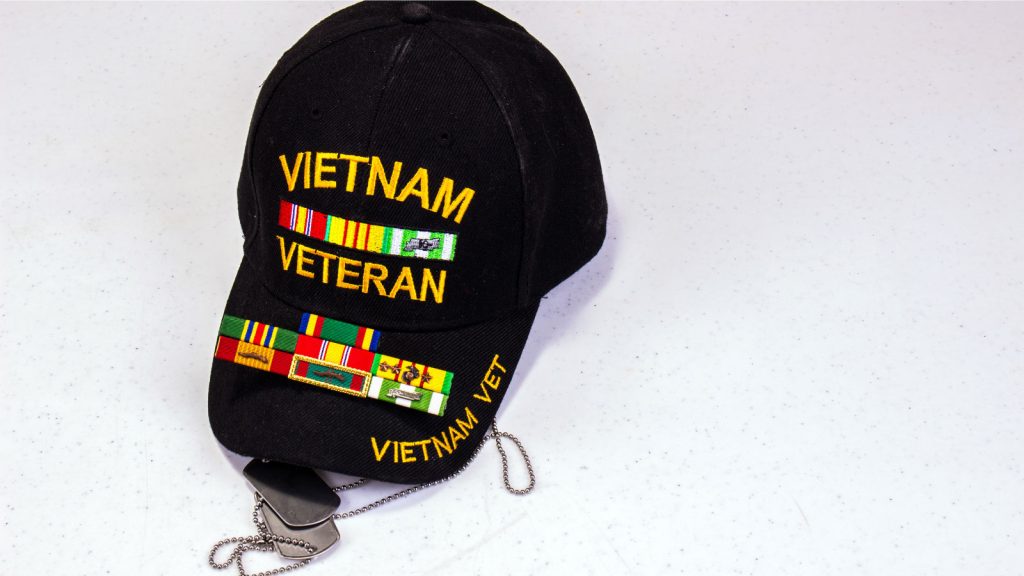
If you served in Vietnam — or are the surviving spouse of someone who did — you may be eligible for more VA benefits than you realize. Approximately 2.7 million Americans served during the Vietnam War, and today fewer than 850,000 Vietnam veterans are still living — many of them in their 70s and 80s and now needing long-term care. The good news is that several VA benefit programs exist specifically to help Vietnam veterans and their surviving spouses pay for that care. This article explains the most important VA benefits for Vietnam veterans, including a benefit that tens of thousands of eligible veterans and families are currently missing out on.
Who Qualifies as a Vietnam Era Veteran?
The VA defines the Vietnam Era wartime period as follows:
- February 28, 1961 – May 7, 1975 for veterans who served in the Republic of Vietnam (boots on the ground, or on a ship off the coast)
- August 5, 1964 – May 7, 1975 for veterans who served anywhere in the world during active duty
To qualify for most VA pension benefits, the veteran must have served at least 90 days of active duty with at least one day falling within the Vietnam Era wartime period, and must have received an honorable or other than dishonorable discharge. It is not required that the veteran served in a combat zone or was injured during service.
Types of VA Benefits Available to Vietnam Veterans
1. VA Disability Compensation
VA disability compensation is a tax-free monthly payment for veterans with service-connected health conditions. For Vietnam veterans, the VA presumes that certain diseases are connected to Agent Orange exposure, meaning you do not need to prove a link between your condition and your military service. Presumptive conditions include:
- Several types of cancer, including bladder cancer, prostate cancer, and respiratory cancers
- Parkinson’s disease
- Ischemic heart disease
- Type 2 diabetes
- Peripheral neuropathy
- Chronic B-cell leukemias
- PTSD and other mental health conditions
The 2022 PACT Act also expanded presumptive coverage to additional conditions and locations. If you were previously denied, you may now qualify under new rules.
2. VA Health Care
Vietnam veterans are eligible to enroll in VA health care, which covers medical treatment, surgery, mental health services, prescriptions, and more. The PACT Act expanded VA health care to include additional toxic exposure conditions and added a toxic exposure screening for every veteran enrolled in the system. If you haven’t enrolled in VA health care, or if you were previously denied care for certain conditions, the PACT Act may have changed your eligibility.
3. VA Pension
A VA pension is a monthly, tax-free benefit for wartime veterans who have limited income and assets. Vietnam veterans who meet the wartime service requirements and financial eligibility criteria may qualify for a basic pension, which helps supplement income for veterans who are elderly or permanently disabled.
4. Aid and Attendance — The Benefit Many Vietnam Veterans Are Missing
Aid and Attendance is an enhanced VA pension for veterans and surviving spouses who need help with the activities of daily living, such as bathing, dressing, mobility, eating, and toileting. It is one of the most valuable and least understood VA benefits available to Vietnam veterans.
The 2026 Aid and Attendance benefit rates are:
| Beneficiary | Monthly Benefit (2026) |
|---|---|
| Surviving Spouse | $1,558 |
| Single Veteran | $2,424 |
| Married Veteran | $2,874 |
| Two Veterans (Married to Each Other) | $3,845 |
Aid and Attendance can be used to pay for home care, assisted living, adult day care, board and care facilities, and skilled nursing home care. Importantly, it is not required that the veteran was injured in service or that the need for care is related to military service. Age-related conditions and illnesses fully qualify.

The PACT Act and What It Means for Vietnam Veterans
The Sergeant First Class Heath Robinson Honoring our Promise to Address Comprehensive Toxics (PACT) Act, signed in 2022, is one of the largest expansions of VA benefits in history. For Vietnam veterans specifically, the PACT Act:
- Added new presumptive conditions linked to herbicide exposure, including hypertension and monoclonal gammopathy of undetermined significance (MGUS)
- Expanded presumptive locations to include additional U.S. military bases in Thailand and other international locations
- Allowed previously denied claims to be reopened and reconsidered under the new presumptive criteria
- Extended eligibility for Blue Water Navy veterans who served on ships off the coast of Vietnam
Important: A VA Inspector General report found that up to 87,000 Vietnam veterans may not have been properly notified that they now qualify for retroactive compensation benefits under the expanded PACT Act rules. If you or a family member was previously denied, it is worth revisiting that claim.
How to Qualify for Aid and Attendance as a Vietnam Veteran
To qualify for Aid and Attendance, the following requirements must be met:
Military Service Requirement
- At least 90 days of active duty service
- At least one day during the Vietnam Era wartime period
- Discharge status other than dishonorable
Medical Requirement
- The veteran or surviving spouse must need assistance with at least two activities of daily living, such as bathing, dressing, mobility, eating, or toileting
- Or the applicant must be a patient in a nursing home, assisted living facility, or require regular medical supervision at home
Financial Requirement
- Income must fall below the annual benefit amount after deducting unreimbursed medical expenses (UMEs) such as home care, assisted living, or nursing home costs
- Net worth (assets minus debts) must be below $163,699 (2026), not counting the primary residence and vehicle
Common Mistakes Vietnam Veterans Make When Applying
The Aid and Attendance application process is more complex than it appears. These are the most common mistakes that lead to delays and denials:
- Incomplete medical documentation: The VA requires a specific attending physician’s statement. Generic doctor’s letters are frequently rejected.
- Misreporting income and assets: Many applicants don’t know how to properly calculate unreimbursed medical expenses, which can significantly reduce countable income and determine eligibility.
- Missing the DD-214: The military discharge document is required to verify wartime service. Applications without it are delayed or rejected.
- Not accounting for asset transfers: The VA has a 36-month look-back period for asset transfers. Transferring assets to reduce net worth can result in a penalty period.
- Applying without professional guidance: The VA does not notify applicants of mistakes on their applications. Errors simply result in delays, lower benefits, or outright denial.
How Patriot Angels Helps Vietnam Veterans
Patriot Angels is a VA-accredited organization that has helped more than 30,000 veterans and surviving spouses secure over $1 billion in VA benefits since 2012. We specialize in Aid and Attendance and work exclusively with veterans and their families to navigate the application process from start to finish.
Our benefit consultants handle everything: reviewing eligibility, gathering documentation, preparing the application correctly the first time, and following up directly with the VA. We maintain an A+ rating with the Better Business Bureau and are fully VA-accredited.
Vietnam veterans have sacrificed enough. Getting the benefits you’ve earned shouldn’t require fighting the VA on your own. Call Patriot Angels today at (844) 757-3047 for a free consultation.
If you or a loved one served our country, let us help you secure
the benefits you’ve earned.
Journey Today
Frequently Asked Questions About Vietnam Era VA Benefits
Do I have to prove Agent Orange exposure to receive VA disability benefits?
No. If you served in Vietnam between January 9, 1962 and May 7, 1975 and have a presumptive condition, the VA automatically assumes exposure. You do not need to prove you were exposed to Agent Orange. Presumptive conditions include several cancers, Parkinson’s disease, ischemic heart disease, Type 2 diabetes, and more. The 2022 PACT Act also added hypertension and other conditions to the presumptive list.
Can the surviving spouse of a Vietnam veteran receive Aid and Attendance?
Yes. The widow or surviving spouse of a qualifying Vietnam veteran may be eligible for up to $1,558 per month tax-free through the Aid and Attendance benefit, as long as she meets the medical and financial requirements. The veteran does not need to have been receiving the benefit at the time of death.
What if I was previously denied VA benefits?
If you were denied VA disability benefits before the PACT Act was signed in 2022, you may now qualify under the expanded rules. Many Vietnam veterans who were previously denied for Agent Orange-related conditions are now eligible under new presumptive criteria. A VA Inspector General report found that up to 87,000 Vietnam veterans were not properly notified of their eligibility. Contact Patriot Angels for a free review of your situation.
Does Aid and Attendance have to be repaid?
No. Aid and Attendance is not a loan. It is a tax-free monthly benefit payment that does not need to be repaid and does not affect Social Security benefits. Once approved, you receive the benefit for life as long as you continue to meet the eligibility requirements.
How long does it take to get approved for Aid and Attendance?
Processing times vary, but a complete and accurate application typically takes 4–6 months to receive a decision from the VA. Incomplete applications take significantly longer and are more likely to be denied. Working with a VA-accredited benefit consultant helps ensure your application is complete the first time, reducing delays and development requests from the VA.