
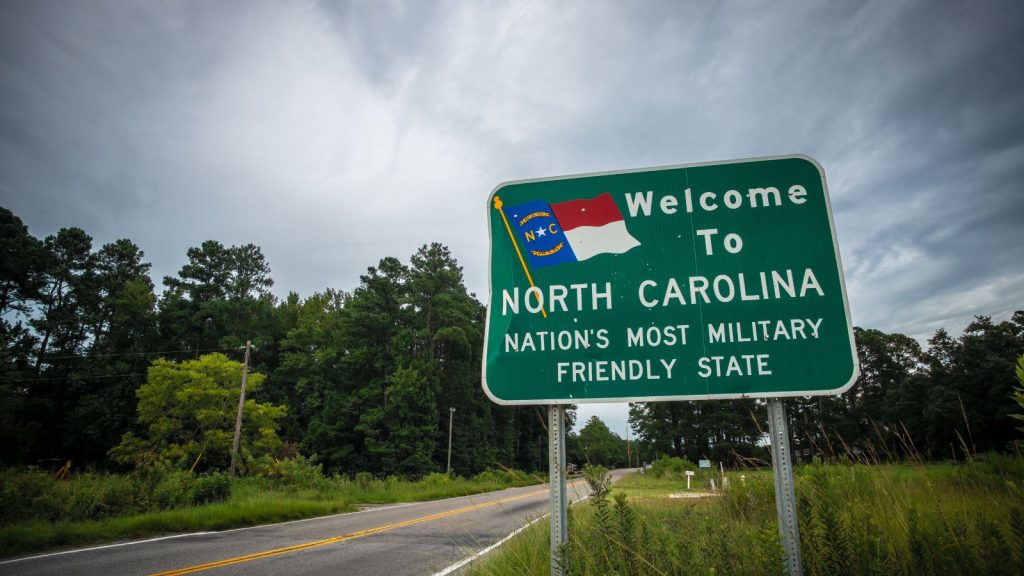
North Carolina is home to more than 615,000 veterans — the eighth-largest veteran population in the country, and roughly 7.3% of the state’s adult population. Nearly 30% of them served during the Vietnam era, and the single largest group of male veterans in the state is now age 75 or older. That means tens of thousands of North Carolina families are asking the same question at the same time: what benefits are actually available, and how do you access them?
The answer is broader than most families realize. North Carolina veterans have access to the full range of federal VA benefits, and the state layers its own programs on top through the North Carolina Department of Military and Veterans Affairs (NCDMVA) — including State Veterans Homes, a disabled veteran property tax exclusion, a full exemption on military retirement pay, and four state veterans cemeteries. This guide covers both the federal and state benefits most relevant to older North Carolina veterans, their spouses, and their surviving spouses.
1. VA Aid & Attendance — Help Paying for Long-Term Care
For wartime veterans who need help with daily activities — bathing, dressing, eating, getting around — the VA Aid & Attendance benefit is often the most financially significant program available. It provides a tax-free payment each month that can be applied toward in-home care, assisted living, memory care, or skilled nursing costs.
Aid & Attendance is a VA pension benefit — not a disability benefit — which means it is based on care needs and household finances rather than how a veteran was injured or whether they served in combat. To qualify, a veteran must have served at least 90 days of active duty with at least one day during a recognized wartime period (WWII, Korean War, Vietnam War, or Gulf War era), received an other-than-dishonorable discharge, need assistance with activities of daily living, and meet the VA’s income and net worth limits. In 2026, the net worth limit is $163,699.
The 2026 tax-free benefit rates are:
- Surviving Spouse: $1,558/month
- Single Veteran: $2,424/month
- Married Veteran: $2,874/month
- Two Veterans Married to Each Other: $3,845/month
This benefit matters in North Carolina because the state’s veteran population skews older than the national average. Assisted living in Charlotte, Raleigh, Wilmington, and Asheville commonly runs $4,500 to $6,500 per month, and skilled nursing runs considerably higher. Aid & Attendance can be applied toward care in a private home, a licensed assisted living community, a memory care community, or a skilled nursing facility. In some circumstances it can also help pay a family member who provides the care — see our guide on whether a family member can be paid to care for a veteran or surviving spouse.
Most families don’t realize Aid & Attendance exists. The VA does not proactively notify eligible veterans or surviving spouses. Many North Carolina veterans — and widows of wartime veterans — are legally entitled to this benefit but have never claimed it. To learn more, read our complete Aid & Attendance Fact Sheet.
2. North Carolina State Veterans Homes
North Carolina operates a network of State Veterans Homes through NCDMVA, providing skilled nursing care to veterans who need a nursing-level of support. These are state-owned communities, financed through a combination of resident contributions and federal VA per diem payments, and managed day to day by a contracted provider under the oversight of the North Carolina State Veterans Affairs Commission.
NCDMVA currently runs four full-service State Veterans Homes with 449 skilled care beds total:
- Salisbury State Veterans Home — 99 beds, in the Piedmont, adjacent to the Salisbury VA campus.
- Black Mountain State Veterans Home — 100 beds, serving western North Carolina near Asheville.
- Kinston State Veterans Home — serving eastern North Carolina.
- Kernersville State Veterans Home — 120 beds, the newest home in the system, in the Triad near Winston-Salem.
The Fayetteville State Veterans Home, long the largest in the system at 150 beds, was closed after NCDMVA identified significant structural deficiencies. The department is replacing the facility and assisted its residents in relocating to other State Veterans Homes or a community of their choosing. Families researching this system online will still find older sources listing five homes — as of now, four are operating.
Each home provides 24-hour care from registered nurses, licensed practical nurses, and certified nursing assistants under physician direction, along with in-house physical, occupational, and speech therapy, a registered dietitian, social workers, and a Veterans Service Officer on site to help residents and families apply for VA benefits. All homes are licensed by the State of North Carolina and certified for Medicare, Medicaid, and third-party insurance.
To be eligible, a veteran must have served in the active Armed Forces (excluding training time only), have a discharge under honorable conditions documented by a DD-214, have been a North Carolina resident for the two years immediately preceding application, be disabled by age, disease, or other cause, and be referred by a licensed physician. Fees are based on the actual cost of care and the resident’s ability to pay. Non-veterans may be admitted in limited circumstances but are capped at no more than 25% of total beds.
State Veterans Homes are skilled nursing — not assisted living. North Carolina’s homes serve veterans who need nursing-level care. If your loved one needs help with daily activities but not skilled nursing, assisted living or in-home care paid partly through Aid & Attendance is usually the better fit. See our guide to whether veterans get free nursing home care for how these programs differ.
3. Disabled Veteran Property Tax Exclusion
North Carolina excludes the first $45,000 of assessed value on a qualifying veteran’s permanent residence from property tax. Unlike many state programs, there is no income limit and no age requirement attached to this exclusion.
To qualify, the property owner must be an honorably discharged veteran (or a veteran discharged under honorable conditions) who either:
- Has a permanent and total service-connected disability rating of 100%, or
- Receives VA benefits for specially adapted housing under 38 U.S.C. 2101.
A never-remarried surviving spouse may also claim the exclusion if the veteran had a permanent and total service-connected disability, received specially adapted housing benefits, or died as a result of a service-connected condition. The $45,000 figure is the maximum exclusion allowed under N.C.G.S. 105-277.1C, and co-owners who are not spouses share that same cap rather than each claiming it separately.
Applying takes two forms and one deadline. Complete Sections 1 and 2 of Form NCDVA-9, take it to your local Veterans Service Office for certification, then submit the certified NCDVA-9 together with Form AV-9 (Application for Property Tax Relief) to your county tax office. The deadline is June 1 of the tax year you are applying for.
Start the certification early. NCDMVA specifically recommends submitting Form NCDVA-9 to a State Veterans Service Center or County Veterans Service Office well ahead of June 1, because the certification step takes time. Waiting until late May is the most common reason families miss a full tax year of savings.
4. Military Retirement Pay Is Exempt from State Income Tax
North Carolina fully exempts military retirement pay from state income tax — one of the more valuable changes the state has made for veterans in recent years, and a meaningful factor for military retirees deciding where to settle.
Under the deduction enacted in Session Law 2021-180, a taxpayer may deduct military retirement pay received from the U.S. government if the retired member either served at least 20 years in the uniformed services or was medically retired under 10 U.S.C. Chapter 61. There is no dollar cap and no age condition. Survivor Benefit Plan (SBP) payments received by a beneficiary are also deductible — a point many surviving spouses miss when filing.
A separate, older provision — the Bailey settlement — fully exempts retirement benefits for those who were vested in a qualifying government retirement system on or before August 12, 1989. Amounts deducted under one provision cannot also be deducted under the other. Other income is taxed at North Carolina’s flat rate, which is 3.99% for 2026.
VA disability compensation is separate and has always been fully tax-free at both the federal and North Carolina state level, at every rating from 10% to 100%, with no income limit. The same is true of Dependency and Indemnity Compensation (DIC) paid to surviving spouses. Thrift Savings Plan distributions, by contrast, are not covered by the military retirement deduction and remain taxable.
5. VA Aid & Attendance for Surviving Spouses
Surviving spouses of North Carolina wartime veterans are one of the most consistently overlooked groups when it comes to VA benefit eligibility. A widow or widower who never served in the military may still qualify for VA pension — including the Aid & Attendance addition — based entirely on their deceased spouse’s military service record.
In 2026, a surviving spouse who qualifies for Aid & Attendance may receive up to $1,558 per month in tax-free benefits — money that can help cover in-home care, assisted living, or other long-term care costs. The veteran does not need to have applied for or received VA benefits during their lifetime for the surviving spouse to be eligible.
Given that Vietnam-era veterans make up nearly 30% of North Carolina’s veteran population, a large number of Tar Heel widows are approaching or already in the years when care costs arrive. For a full explanation of eligibility and how to apply, see our guide to Aid & Attendance for surviving spouses. Surviving spouses who may qualify for DIC instead should review our DIC vs. Aid & Attendance comparison to understand which benefit applies to their situation.
Not Sure What Benefits a North Carolina Veteran May Qualify For?
Our Benefit Specialists, working under the guidance of our VA-accredited attorney, will review your situation and help you understand your options.
See If You Qualify6. VA Health Care Across North Carolina
North Carolina veterans are served by four VA medical centers plus a statewide network of more than 30 community-based outpatient clinics (CBOCs) and larger health care centers, which puts most of the state within reasonable driving distance of VA care.
- Durham VA Medical Center — serving the Triangle and north-central North Carolina, with a strong academic affiliation and specialty services.
- W.G. (Bill) Hefner VA Medical Center, Salisbury — serving the Piedmont, with health care centers in Charlotte and Kernersville extending its reach.
- Fayetteville VA Medical Center — part of the VA Coastal Health Care System, serving the Fort Bragg region and southeastern North Carolina.
- Charles George VA Medical Center, Asheville — the Western North Carolina VA Health Care System, serving a 23-county mountain region.
Enrollment in VA health care is separate from Aid & Attendance pension, and enrolling in one does not disqualify a veteran from the other. Veterans who live far from a medical center may also qualify for VA Community Care, which allows treatment from a local non-VA provider at VA expense when distance or wait times exceed certain thresholds.
7. VA Long-Term Care Benefits
North Carolina veterans enrolled in VA health care have access to a range of VA-funded long-term care services that go beyond what most families are aware of. These include:
- VA Community Living Centers (CLCs): VA-operated skilled nursing and rehabilitation units providing long-term care for eligible veterans — including the Carolina Pride Community Living Center at the Salisbury VA and CLCs at Durham and Asheville.
- Community Nursing Home Care: The VA contracts with private nursing homes to provide care for eligible veterans who need placement outside a VA facility.
- Home-Based Primary Care (HBPC): A VA program that brings physicians, nurses, therapists, and social workers directly into the veteran’s home — particularly valuable in rural eastern and western North Carolina, where travel to a medical center is a real barrier.
- Adult Day Health Care: VA-funded daytime programs offering health monitoring, therapeutic activities, and social engagement for veterans who live at home but benefit from structured daily support.
- Respite Care: Temporary relief care provided to give family caregivers a break — available through the VA’s caregiver support programs.
- Hospice and Palliative Care: End-of-life care services available through VA facilities and community partners for enrolled veterans.
VA health care and Aid & Attendance pension are separate programs and can often be used together. See our overview of VA long-term care options for a full breakdown of how these programs work and who qualifies.
8. VA Caregiver Support Programs
For North Carolina families providing care to a veteran at home, the VA offers two caregiver support programs that operate separately from Aid & Attendance pension and serve different purposes.
The Program of General Caregiver Support Services (PGCSS) is available to caregivers of all enrolled veterans regardless of era served. It provides caregiver education and training, a caregiver support line, peer support mentoring, and referrals to community resources — no financial stipend, but practical support for family caregivers navigating a difficult role.
The Program of Comprehensive Assistance for Family Caregivers (PCAFC) is more substantial. As of October 2022, the VA expanded PCAFC eligibility to include veterans who served before May 7, 1975, opening the program to many older veterans and their caregivers for the first time. Eligible caregivers under PCAFC may receive a monthly financial stipend, health care coverage through CHAMPVA (if not already covered), mental health counseling, respite care, and caregiver training.
For more information on VA programs that support caregivers and the veterans they care for, see our guide to how to get VA caregiver benefits.
9. State Veterans Cemeteries and Burial Benefits
North Carolina operates four state veterans cemeteries through NCDMVA, located in Black Mountain, Goldsboro (Eastern Carolina State Veterans Cemetery), Jacksonville (Coastal Carolina State Veterans Cemetery), and Spring Lake (Sandhills State Veterans Cemetery). Honorably discharged North Carolina resident veterans may be interred at no charge; spouses and eligible dependents may be interred alongside them for a modest fee.
Separately, the VA National Cemetery Administration maintains four national cemeteries in North Carolina — in New Bern, Raleigh, Salisbury, and Wilmington. Between the state and national systems, most North Carolina families have a burial option within a reasonable distance.
Eligible veterans and surviving spouses may also qualify for federal burial benefits including a government headstone or marker, a burial flag, a Presidential Memorial Certificate, and in some circumstances a burial allowance. Making these arrangements in advance spares families from having to research eligibility during the days immediately after a death.
10. Recreation, License, and Education Benefits
North Carolina rounds out its benefit package with several smaller programs that are easy to overlook but simple to claim:
- Lifetime hunting and fishing licenses: Veterans with a 50% or greater service-connected disability rating who are North Carolina residents may purchase lifetime licenses at reduced rates ranging from roughly $10 to $110 depending on license type.
- State parks: Veterans with a service-connected disability may receive a free annual pass to North Carolina state parks, which includes discounts on equipment rentals.
- Scholarship for Children of Wartime Veterans: Provides up to eight academic semesters of assistance at North Carolina institutions for children of veterans who were killed or disabled in service, were POWs, or died of service-connected causes. Funding levels vary by year, so confirm current availability with NCDMVA.
- In-state tuition: Veterans discharged from active duty who live in North Carolina qualify for in-state tuition rates at public colleges and universities, and the UNC system awards academic credit for military training.
- Specialty license plates and vehicle tax relief: Disabled veterans are exempt from the highway use tax on vehicles specially adapted by the VA, and a range of military and veteran license plates are available through NCDMV.
NCDMVA operates veterans service centers across the state, and County Veterans Service Officers are available in most North Carolina counties. Both can help with state-level applications at no charge — and the NCDVA-9 certification for the property tax exclusion has to go through one of them.
How Patriot Angels Helps North Carolina Veterans and Their Families
Navigating the full range of federal and state benefits available to North Carolina veterans can be complex — and the stakes are high, particularly for elderly veterans and surviving spouses who are managing significant long-term care costs. Patriot Angels has helped more than 30,000 veterans and surviving spouses secure over $1 billion in VA benefits since 2012. Our Benefit Specialists work under the guidance of our VA-accredited attorney and provide expert guidance.
If you have questions about Aid & Attendance or other VA benefits for a North Carolina veteran or surviving spouse, call us at (844) 757-3047 or visit our free consultation page to get started.
If you or a loved one served our country, let us help you secure
the benefits you’ve earned.
Journey Today
Frequently Asked Questions About VA Benefits for North Carolina Veterans
Common questions from North Carolina veterans and their families about federal and state benefit programs.
What VA benefits are available for North Carolina veterans?
North Carolina veterans may qualify for federal VA benefits including Aid & Attendance pension (up to $2,874/month tax-free for a married veteran in 2026), VA disability compensation, VA health care through four medical centers, and VA long-term care programs. North Carolina also offers state-level benefits through NCDMVA, including four State Veterans Homes providing skilled nursing care, a $45,000 disabled veteran property tax exclusion, a full exemption on military retirement pay, four state veterans cemeteries, and reduced-rate hunting and fishing licenses.
How many North Carolina State Veterans Homes are there and who can apply?
NCDMVA currently operates four full-service State Veterans Homes with 449 skilled care beds, located in Salisbury, Black Mountain, Kinston, and Kernersville. The Fayetteville home closed for replacement after structural deficiencies were identified, so older sources listing five homes are out of date. To be eligible, a veteran must have served in the active Armed Forces with a discharge under honorable conditions, have been a North Carolina resident for the two years before applying, be disabled by age or disease, and be referred by a licensed physician. Fees are based on the cost of care and ability to pay.
Can a surviving spouse of a North Carolina veteran receive VA benefits?
Yes. Surviving spouses of wartime veterans may qualify for Aid & Attendance pension (up to $1,558/month in 2026), VA Survivors Pension, or Dependency and Indemnity Compensation (DIC) if the veteran’s death was service-connected. Eligibility is based on the veteran’s service record — the surviving spouse does not need to have served in the military. With nearly 30% of North Carolina veterans having served during the Vietnam era, many Tar Heel widows and widowers may be entitled to these benefits but have never applied.
What is the North Carolina disabled veteran property tax exclusion?
North Carolina excludes the first $45,000 of assessed value on a qualifying veteran’s permanent residence from property tax, with no income limit. The veteran must have a permanent and total service-connected disability rating of 100% or receive VA specially adapted housing benefits under 38 U.S.C. 2101. Never-remarried surviving spouses may also qualify. Applications require Form NCDVA-9, certified by a Veterans Service Office, submitted with Form AV-9 to the county tax office by June 1 of the tax year.
Does North Carolina tax military retirement pay?
No. North Carolina fully exempts military retirement pay from state income tax for retirees who served at least 20 years or were medically retired under 10 U.S.C. Chapter 61, with no dollar cap and no age requirement. Survivor Benefit Plan payments to a beneficiary are also deductible. A separate Bailey settlement exclusion applies to those vested in a qualifying government retirement system on or before August 12, 1989. VA disability compensation and DIC are tax-free at both the federal and state level.