On this page
What Is Memory Care?
Memory care is for the stage of dementia when love and good intentions at home are no longer enough to keep someone safe: a veteran who leaves the stove on, walks out at 3 a.m., or no longer recognizes the house. Residents live in a secured wing or building where every caregiver is trained in dementia, days follow a steady routine, and help is there around the clock.
Most memory care sits inside an assisted living community and is licensed by the state as a special unit, with extra rules for staffing, training and secure exits. It is not a hospital ward. Residents have their own rooms, eat together, and spend the day in structured activities designed for memory loss.

Safety without a locked room
Secured exits, alarmed doors and enclosed gardens let residents walk freely without the risk of wandering off.

A routine that calms
Music, simple chores, exercise and familiar rituals, scheduled the same way each day to ease anxiety and sundowning.
Memory Care vs. Assisted Living vs. In-Home Care vs. Nursing Home
The right setting depends less on the diagnosis than on safety: how much supervision is needed, and whether home can still provide it.
| Memory care | Assisted living | In-home care | Nursing home | |
|---|---|---|---|---|
| Best for | Dementia with wandering, confusion or behaviors that make home unsafe | Physical help with daily tasks, memory mostly intact | Staying home with a caregiver who comes in | 24-hour skilled nursing for serious medical needs |
| Security | Secured doors, enclosed outdoor space | Usually open campus | Depends on the home and the hours covered | Varies; not designed around dementia |
| Staff training | Dementia-specific, every shift | General personal care | Varies by agency | Licensed nurses on site |
| Typical cost per month | $6,690 | $6,200 (CareScout 2025) | $6,673 for 44 hrs/week | $9,581 semi-private |
| Can Aid & Attendance help? | Yes | Yes | Yes | Yes, though costs usually exceed it |



Signs a Veteran May Need Memory Care
Families often wait until a crisis. These signs usually show up first.
- Wandering or getting lost on a familiar route.
- Leaving the stove or water running.
- Agitation late in the day (sundowning).
- Missed meals or medications even with reminders.
- Suspicion or fear of a spouse or caregiver.
- Falls at night.
- A caregiving spouse who is exhausted or unwell.
- Unsafe driving.
Related Patriot Angels guides

What Does Memory Care Cost?
A typical memory care bill in the U.S. is about $6,690 a month, based on 2025 move-in prices, roughly $490 more than the $6,200 assisted living median. The extra pays for more staff per resident, dementia training and secure buildings. Up to $3,845 a month in Aid & Attendance would cover about 57% of it.
State costs range widely. The lowest are Utah ($4,806), Georgia ($5,000), South Carolina ($5,050); the highest are Alaska ($12,982), Vermont ($11,195), North Dakota ($10,100).
Usually included
- Room in a secured unit
- Meals, snacks and hydration help
- Help with bathing, dressing and toileting
- Medication management
- Daily dementia programming
Ask about
- Care-level or behavior surcharges
- Incontinence supplies
- One-time community fees
- Escorts to medical visits
- Rate increases each year



How Veteran Families Pay for Memory Care
Few families pay for memory care from a single source. For veterans and surviving spouses, the VA benefit often closes the gap.

VA Aid & Attendance
A tax-free monthly payment added to VA Pension for wartime veterans and surviving spouses who need care or supervision. Up to $3,845 a month, paid to the family. Check eligibility
The family home
When a veteran with dementia moves out, the house often funds care. VA counts sale proceeds, so plan the timing with us.

Income and savings
Social Security, military retirement, pensions and savings typically cover what the benefit does not.

Insurance and Medicaid
Long-term care insurance often pays for memory care. Medicaid waivers in some states pay for services but not room and board.



Could Aid & Attendance Help Pay for Memory Care?
Memory care is round-the-clock paid care, which is exactly what Aid & Attendance is for. A wartime veteran or surviving spouse living with dementia may qualify for up to $3,845 a month. Answer a few questions to see where your family stands.
Prefer to talk it through? Call (844) 757-3047
Who Qualifies When Dementia Is Involved?
Wartime service
At least 90 days of active duty, one day during a wartime period, and a discharge other than dishonorable. Stateside service counts.
Supervision counts as care
A veteran who can still dress but cannot be left alone safely may qualify. A doctor’s statement about memory loss and the need for protective care supports the claim.
Financial limits
VA subtracts recurring care costs from income. A memory care bill often brings countable income low enough to qualify.
Someone signs for them
If dementia affects judgment, a spouse or adult child with power of attorney can file on the veteran’s behalf.



How to Choose a Memory Care Community
Visit twice: once on a scheduled tour and once unannounced in the late afternoon, when dementia symptoms are often at their worst.
Staffing
- How many caregivers per resident, day and night?
- How many hours of dementia training?
- How long have the floor staff worked here?
Daily life
- What does a typical day look like?
- How do staff respond to agitation without medication?
- Is there a safe outdoor area?
Changing needs
- Which behaviors would require a move out?
- Do hospice teams work with residents here?
- How are families kept informed?
Veteran fit
- Will they provide cost statements for the VA claim?
- Do they honor service with events or recognition?
- Can they coordinate with VA health care?


Veteran-Approved Memory Care Communities
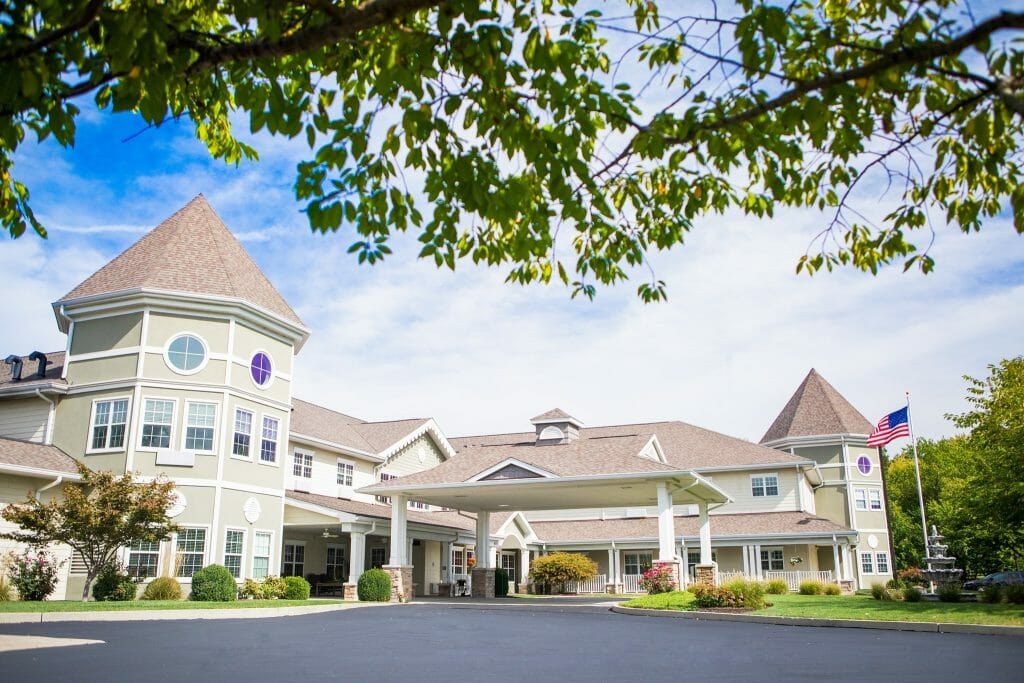
Patriot Angels works with 1,599 memory care partner communities in 48 states, 1,293 of which also offer assisted living. A sample from the states with the most partners:




Veteran Families We’ve Helped
Rated 4.9 on Google. BBB A+ accredited. See all reviews
Memory Care and VA Benefits FAQ
Does VA pay for memory care?
VA does not pay private memory care communities for room and board, but Aid & Attendance pays a qualifying veteran or surviving spouse up to $3,845 a month, which families commonly use for memory care.
How much does memory care cost?
About $6,690 a month is typical in the U.S., ranging from $4,806 to $12,982 by state.
Does Medicare cover memory care?
No. Medicare covers doctor visits, hospital stays and short rehab, not long-term custodial care.
Is a dementia diagnosis required for Aid & Attendance?
No. VA looks at the need for help or supervision. Memory loss that makes it unsafe to be alone can qualify.
Can a surviving spouse with dementia qualify?
Yes, if the veteran had qualifying wartime service and the spouse meets the care and financial rules.
Can we apply after moving into memory care?
Yes. Filing after move-in is common, and benefits are paid from the filing date once approved.
Memory Care by State
Pick a state for partner communities, state costs and dementia figures.