
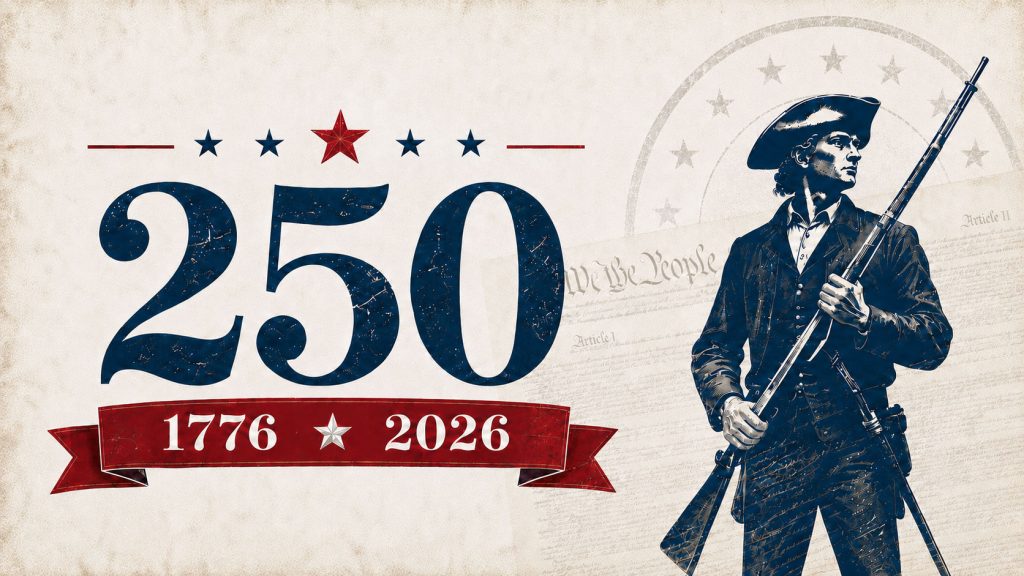
On July 4, 2026, the United States celebrates a milestone no living American has ever seen — 250 years since the Declaration of Independence was adopted in Philadelphia. Known as the Semiquincentennial, America’s 250th birthday is being marked with a full year of festivities across all 50 states, from tall ships in New York Harbor to fireworks over Independence Hall.
It’s also a fitting moment to remember something many people don’t know: the American Revolution didn’t just create a nation. It created the very first veterans benefits — a promise the country has kept for 250 years and still keeps today.
The Day That Started It All: July 4, 1776
Two hundred fifty years ago, delegates from the 13 colonies gathered in Philadelphia and adopted the Declaration of Independence, proclaiming that the colonies would no longer live under British rule. The document asserted that all people are endowed with unalienable rights — life, liberty, and the pursuit of happiness — and that governments derive their just powers from the consent of the governed.
That declaration came at a price. Roughly 217,000 colonists fought in the Revolutionary War, which lasted until 1783. Thousands were wounded or gave their lives to secure the freedom we celebrate every Fourth of July. Every generation of American service members since — from the Revolution through World War II, Korea, Vietnam, and the Gulf War — has carried that legacy forward.
How America Is Celebrating Its 250th Birthday
The Semiquincentennial is shaping up to be the largest national celebration since the Bicentennial in 1976. Festivities began on Memorial Day 2025 and continue throughout 2026, with events planned in communities across the country.
Sail250: The Largest Maritime Gathering in U.S. History
On July 4, 2026, the U.S. Navy hosts Sail250 in New York Harbor — an international fleet review expected to bring together roughly 60 ships from 30 nations, making it the largest maritime gathering in American history. It echoes the beloved tall ships gathering of the 1976 Bicentennial, when vessels from around the world sailed past the Statue of Liberty.
Celebrations on the National Mall and Across the Country
Washington, D.C. is hosting a “Great American State Fair” on the National Mall, showcasing every state in the Union. The National Archives is sending founding documents on tour to museums across the country for the first time in history, and the National Park Service has restored historic Revolutionary sites — including the First Bank of the United States in Philadelphia and a new immersive museum beneath the Lincoln Memorial. A fleet of mobile museums is traveling to all 48 contiguous states, bringing the story of American independence to local schools, libraries, and community gatherings.
The Cities Where It All Began
Philadelphia, Boston, New York, and Charleston are serving as primary host cities. Philadelphia — where the Declaration was signed — is planning a massive multi-day celebration expected to draw millions of visitors, and even hosts a FIFA World Cup match on July 4 itself. Boston is building programming around its historic Freedom Trail, while Charleston is staging Revolutionary War battle reenactments. Wherever you live, chances are your community has parades, fireworks, and commemorations planned.
The Revolution Created America’s First Veterans Benefits
Here’s a piece of history that deserves more attention this Independence Day: caring for those who served is as old as America itself — older, in fact. The Plymouth colony began providing pensions for disabled soldiers as early as 1636, more than a century before the Revolution.
Then, on August 26, 1776 — just seven weeks after the Declaration was signed — the Continental Congress adopted the nation’s first pension legislation. It provided half pay to disabled military veterans who could no longer earn a living, for as long as they remained disabled. In 1778, Congress extended half pay to officers who served through the end of the war, and on August 24, 1780, it approved the first widow’s pension, providing support to the widows and orphans of fallen officers.
A promise older than the Constitution: Before America had a Constitution, a president, or even a guaranteed victory in the war, it made a commitment to the people who fought for its freedom — and to their surviving spouses. That commitment has now endured for 250 years.
Are You a Wartime Veteran or Surviving Spouse — or Is There One in Your Family?
Our Benefit Specialists, working under the guidance of our VA-accredited attorney, offer a free consultation to help veterans, surviving spouses, and their families find out whether the Aid & Attendance benefit can help pay for the care they need.
Get a Free Consultation250 Years Later, the Promise Continues
Today, the promise first made by the Continental Congress lives on through the Department of Veterans Affairs. One of its most valuable — and most overlooked — programs is the VA Aid & Attendance benefit, a tax-free monthly pension that helps wartime veterans and surviving spouses pay for long-term care, including home care, adult day care, board and care, assisted living, and skilled nursing care.
2026 Aid & Attendance Benefit Amounts
For the 2026 benefit year (effective December 1, 2025 through November 30, 2026), Aid & Attendance can provide:
- Surviving spouse: up to $1,558 per month
- Single veteran: up to $2,424 per month
- Married veteran: up to $2,874 per month
- Two veterans married to each other: up to $3,845 per month
To qualify, the veteran must have served at least 90 days of active duty with at least one day during an eligible wartime period, received an honorable or other than dishonorable discharge, and the applicant must need help with activities of daily living such as bathing, dressing, or mobility. Income and net worth requirements also apply — the 2026 net worth limit is $163,699.
You can find full eligibility details in our Aid & Attendance Fact Sheet, and a complete breakdown of the current rates in our 2026 Aid & Attendance benefit rates guide.
Honor the Legacy This Independence Day
As fireworks light up the sky for America’s 250th birthday, take a moment to think of the veterans and surviving spouses in your own family and community. Many who served during World War II, Korea, Vietnam, and the Gulf War are now seniors who need help with daily care — and far too many have never heard of the benefit their service earned.
At Patriot Angels, our Benefit Specialists, working under the guidance of our VA-accredited attorney, have helped more than 30,000 veterans and surviving spouses navigate the Aid & Attendance process. If you or a loved one may qualify, call us today at (844) 757-3047 — and from all of us, happy 250th birthday, America.
If you or a loved one served our country, let us help you secure
the benefits you’ve earned.
Journey Today
Frequently Asked Questions
Common questions about America’s 250th anniversary and the veterans benefits born from the Revolution.
What is the Semiquincentennial?
The Semiquincentennial is the 250th anniversary of the United States Declaration of Independence, celebrated on July 4, 2026. Nationwide festivities include Sail250 in New York Harbor, a Great American State Fair on the National Mall, touring exhibits of founding documents from the National Archives, and major celebrations in historic cities like Philadelphia, Boston, New York, and Charleston.
When did America first provide benefits to veterans?
The Continental Congress adopted the first national pension legislation on August 26, 1776 — just weeks after the Declaration of Independence was signed. It provided half pay to disabled Revolutionary War veterans who could no longer earn a living. The first widow’s pension followed on August 24, 1780. Colonial pensions date back even further, to the Plymouth colony in 1636.
What VA benefits help senior veterans and surviving spouses pay for care today?
The VA Aid & Attendance benefit is a tax-free monthly pension for wartime veterans and surviving spouses who need help with activities of daily living. In 2026, it provides up to $2,424 per month for a single veteran and up to $1,558 per month for a surviving spouse, and can help pay for home care, adult day care, board and care, assisted living, and skilled nursing care.
Who qualifies for VA Aid & Attendance?
The veteran must have served at least 90 days of active duty with at least one day during an eligible wartime period and received an honorable or other than dishonorable discharge. The applicant must need assistance with activities of daily living, such as bathing, dressing, or mobility, and meet the VA’s financial criteria. The 2026 net worth limit is $163,699.