VA BENEFITS FOR ASSISTED LIVING

Veterans and surviving spouses may qualify for VA benefits that help cover assisted living costs.

See if You Qualify for VA Benefits

Free consultation. No obligation.

Does the VA Help Pay for Assisted Living?

Yes. The VA does not usually pay assisted living communities directly, but eligible veterans and surviving spouses may receive monthly VA benefits that can help offset assisted living costs.

One of the most important benefits is Aid & Attendance , which may provide tax-free financial support when a veteran or surviving spouse needs help with daily activities such as bathing, dressing, mobility, meals, or supervision.

For families comparing assisted living options, this benefit can make care more affordable and help create a clearer plan for long-term support.

Caregiver assisting widow in assisted living

Key Takeaways

  1. VA benefits may help reduce assisted living costs for qualifying veterans and surviving spouses who need long-term daily support.
  2. Assisted living care may support Aid & Attendance eligibility when daily help with bathing, dressing, mobility, meals, supervision, or personal care is needed.
  3. Aid & Attendance benefit amounts may offset monthly care expenses, helping families plan for housing, personal care, meals, and ongoing assisted living support.
  4. Assisted living costs and options vary by state, so exploring local communities can help families compare care availability and next steps.

Does Assisted Living Care Qualify for Aid & Attendance?

Assisted living care may help support an Aid & Attendance claim when a veteran or surviving spouse needs regular help with daily activities. Many assisted living communities provide assistance with bathing, dressing, mobility, medication reminders, meals, and personal care — the types of support families often document when applying for this VA benefit.

Eligibility still depends on military service, care needs, and financial guidelines, but assisted living can be an important part of showing that ongoing daily support is needed.

1. Military Service Requirements

Assisted living care may support an Aid & Attendance claim, but the veteran must first meet the VA’s basic service requirements. In general, the benefit is available to wartime veterans and surviving spouses of wartime veterans who meet discharge and active-duty service standards.

  • The applicant must be a veteran or the surviving spouse of a veteran.
  • The veteran’s discharge must not be dishonorable.
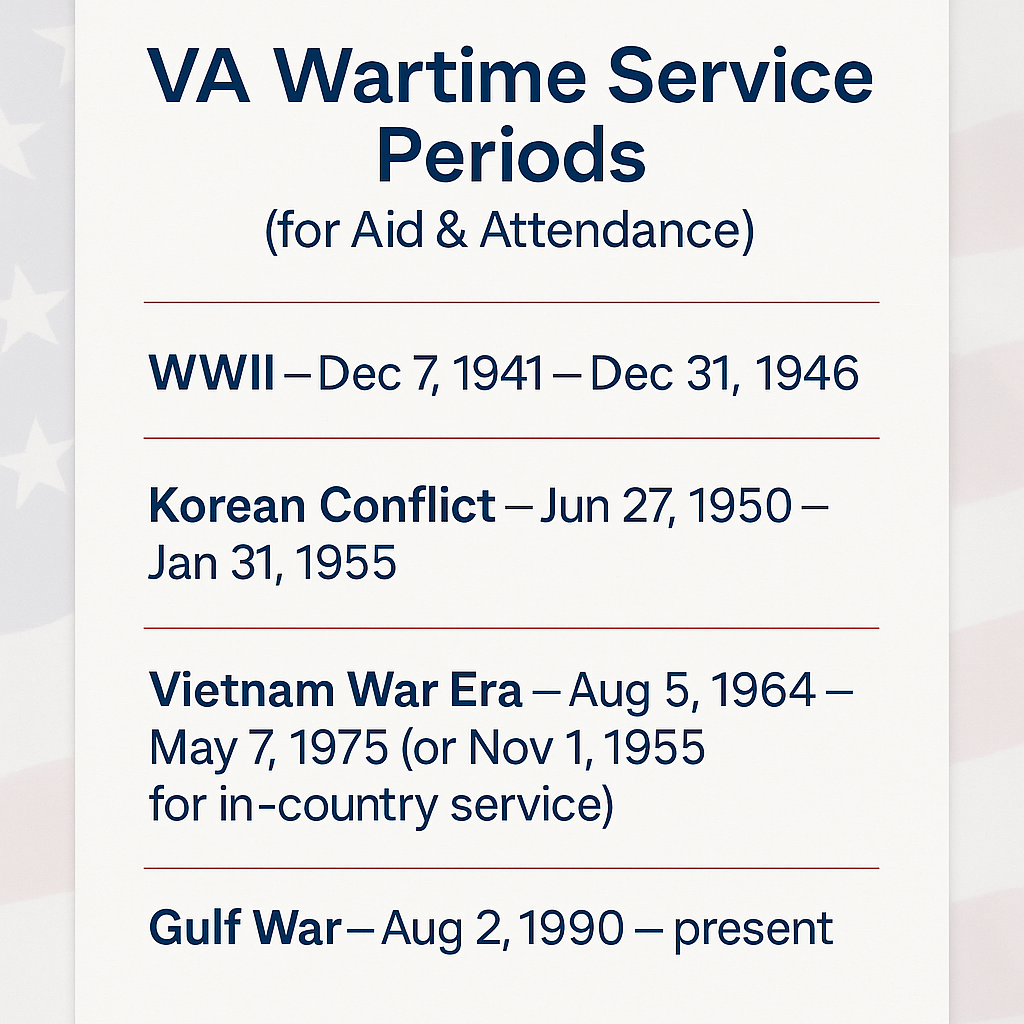
  • The veteran generally must have served during a VA-recognized wartime period.
  • Minimum active-duty service requirements may apply based on when the veteran served.
  • Families exploring assisted living should confirm service history early, since military records are a key part of the Aid & Attendance application.

2. Assisted Living Care Needs

Assisted living often becomes part of the Aid & Attendance conversation when a veteran or surviving spouse needs regular help with daily routines. The VA looks at whether the applicant needs support with personal care, supervision, or a protected living environment.

  • Help with activities of daily living, such as bathing, dressing, eating, toileting, or moving safely from one place to another.
  • Ongoing personal care support, including reminders, mobility assistance, medication reminders, meals, or help maintaining a safe daily routine.
  • A protected or supervised setting when physical limitations, dementia, Alzheimer’s disease, or other cognitive concerns make living alone unsafe.
  • Documentation from an assisted living community, physician, or care provider may help show why daily support is needed.

3. Financial Guidelines

The VA also reviews income, assets, and ongoing care costs when determining Aid & Attendance eligibility. Because assisted living can be a major monthly expense, those care costs may play an important role in how the VA evaluates a family’s financial situation.

  • The VA considers both income and assets when reviewing financial eligibility.
  • Certain unreimbursed care expenses, including assisted living costs, may help reduce countable income.
  • Families should gather records that show monthly income, assets, and assisted living or care-related expenses.
  • Financial rules can be complex, so many families choose to review eligibility before assuming they do or do not qualify.

How Much Can Aid & Attendance
Help With Assisted Living?

The VA Aid & Attendance benefit provides monthly, tax-free financial support to qualifying wartime veterans and surviving spouses. For families considering assisted living, these payments may help offset the cost of housing, personal care, meals, supervision, and daily support services.

For 2026, eligible applicants may receive up to $3,845 per month in additional income. Actual benefit amounts depend on marital status, documented care needs, income, assets, and qualifying care expenses.

While Aid & Attendance may not cover the full cost of assisted living, it can make monthly care expenses more manageable for eligible veterans and surviving spouses. Patriot Angels helps families understand what they may qualify for and how this benefit can fit into their long-term care plan.

Aid and Attendance Benefit Amounts (2026)

Surviving Spouse: $1,558.00
Veteran Single: $2,424.00
Veteran Married: $2,874.00
Veteran Married to Veteran: $3,845.00
Veteran Married (Spouse only care): $1,903.00
Check Your Eligibility

Find an Assisted Living Community Near You

Patriot Angels is proud to partner with thousands of assisted living communities across the United States that support veterans and their families. Explore the pages below to find assisted living options in your state and learn how VA benefits such as Aid and Attendance may help qualifying veterans and surviving spouses offset the cost of care.

VA Assisted Living Benefits in Alabama VA Assisted Living Benefits in Alaska VA Assisted Living Benefits in Arizona VA Assisted Living Benefits in Arkansas VA Assisted Living Benefits in California VA Assisted Living Benefits in Colorado VA Assisted Living Benefits in Connecticut VA Assisted Living Benefits in Delaware VA Assisted Living Benefits in Florida VA Assisted Living Benefits in Georgia VA Assisted Living Benefits in Hawaii VA Assisted Living Benefits in Idaho VA Assisted Living Benefits in Illinois VA Assisted Living Benefits in Indiana VA Assisted Living Benefits in Iowa VA Assisted Living Benefits in Kansas VA Assisted Living Benefits in Kentucky VA Assisted Living Benefits in Louisiana VA Assisted Living Benefits in Maine VA Assisted Living Benefits in Maryland VA Assisted Living Benefits in Massachusetts VA Assisted Living Benefits in Michigan VA Assisted Living Benefits in Minnesota VA Assisted Living Benefits in Mississippi VA Assisted Living Benefits in Missouri VA Assisted Living Benefits in Montana VA Assisted Living Benefits in Nebraska VA Assisted Living Benefits in Nevada VA Assisted Living Benefits in New Hampshire VA Assisted Living Benefits in New Jersey VA Assisted Living Benefits in New Mexico VA Assisted Living Benefits in New York VA Assisted Living Benefits in North Carolina VA Assisted Living Benefits in North Dakota VA Assisted Living Benefits in Ohio VA Assisted Living Benefits in Oklahoma VA Assisted Living Benefits in Oregon VA Assisted Living Benefits in Pennsylvania VA Assisted Living Benefits in Rhode Island VA Assisted Living Benefits in South Carolina VA Assisted Living Benefits in South Dakota VA Assisted Living Benefits in Tennessee VA Assisted Living Benefits in Texas VA Assisted Living Benefits in Utah VA Assisted Living Benefits in Vermont VA Assisted Living Benefits in Virginia VA Assisted Living Benefits in Washington VA Assisted Living Benefits in West Virginia VA Assisted Living Benefits in Wisconsin VA Assisted Living Benefits in Wyoming

What Assisted Living Communities Provide

Assisted living communities provide support with many of the day-to-day tasks that often become difficult with age, including bathing, dressing, mobility, medication management, meals, and routine personal care. Because Aid and Attendance is designed for qualifying veterans and surviving spouses who need help with daily living activities, many of the services provided in assisted living may directly relate to benefit eligibility. Understanding what assisted living includes can help families better see why this level of care is often part of the Aid and Attendance conversation.

Independent Living With Built-In Support

Assisted living allows residents to maintain their own space — often in a private apartment — while having access to support when it’s needed. This creates a middle ground between living completely independently and requiring full-time care.

For many older adults, this balance makes it easier to stay self-sufficient without the stress of managing everything alone.

Assisted living apartment-style community

Personalized Help With Daily Tasks

Residents can receive help with activities such as bathing, dressing, mobility, and medication reminders based on their individual needs. Care is typically flexible, meaning support can increase over time if circumstances change.

This level of assistance is often what allows veterans to meet the medical requirements for Aid and Attendance benefits, depending on their situation.

Caregiver assisting assisted living resident

Simplified Daily Living and Convenience

Assisted living communities often include services like meal preparation, housekeeping, laundry, and transportation. These built-in conveniences remove many of the day-to-day responsibilities that can become difficult with age.

By reducing these burdens, residents can focus more on enjoying their time rather than managing a household.

Senior receiving assisted living support

Social Environment and Active Lifestyle

Unlike more clinical care settings, assisted living communities emphasize social interaction and engagement. Residents often have access to group activities, fitness programs, outings, and shared spaces designed to encourage connection.

This environment can play a major role in improving overall quality of life, especially for older adults who may otherwise feel isolated at home.

Residents participating in assisted living activities

Get Help Understanding Your Assisted Living Benefit Options

If you’re exploring assisted living for a veteran or surviving spouse, Patriot Angels can help you understand whether Aid & Attendance may apply, what documentation may be needed, and how to move forward with more confidence.

See If You Qualify for Aid & Attendance

Frequently Asked Questions

The amount of financial assistance a veteran may receive depends on several factors, including income, number of dependents, care needs, and which VA programs they qualify for. Some veterans may receive modest monthly benefits, while others may qualify for larger payments through programs such as VA Pension or Aid and Attendance.

In some cases, surviving spouses may qualify for financial assistance through the Survivors Pension program. Eligibility depends on factors such as the veteran’s service history, the spouse’s financial circumstances, and whether the spouse meets the care-related requirements for the benefit.

Yes. VA financial benefits such as VA Pension and Aid and Attendance can often be used to help cover long-term care expenses, including assisted living communities, memory care, or in-home care services. For many families, Aid and Attendance is one of the most important benefits to explore when assisted living becomes necessary.

Assisted living may qualify for Aid and Attendance when the veteran or surviving spouse needs help with activities of daily living such as bathing, dressing, mobility, or medication management. Eligibility is based on the applicant’s medical and financial situation, not just the name of the care setting.

Services that may relate to Aid and Attendance eligibility often include help with bathing, dressing, toileting, transferring, mobility, medication management, and other forms of routine personal care. These types of daily support are often central to showing that a qualifying need for assistance exists.

Applicants typically need military service records, financial documentation, and medical evidence showing the need for care. This may include VA forms such as Form 21-2680, along with records that help demonstrate eligibility for the benefit.

Sources & Policy References

National Research and Policy References for VA Assisted Living Benefits

The information on this page is based on official U.S. Department of Veterans Affairs resources, national long-term care cost data, and assisted living policy references. These sources explain how Aid and Attendance works, how veterans and surviving spouses may qualify, and how assisted living costs compare across the country.

Because VA pension rules, benefit rates, forms, and long-term care cost data may change over time, families should verify the most current information directly with the Department of Veterans Affairs and the original source organizations listed below.

Important Note

This page is intended for educational purposes only and should not be considered legal, medical, or financial advice. VA benefit rules, assisted living costs, and policy guidance may change over time.