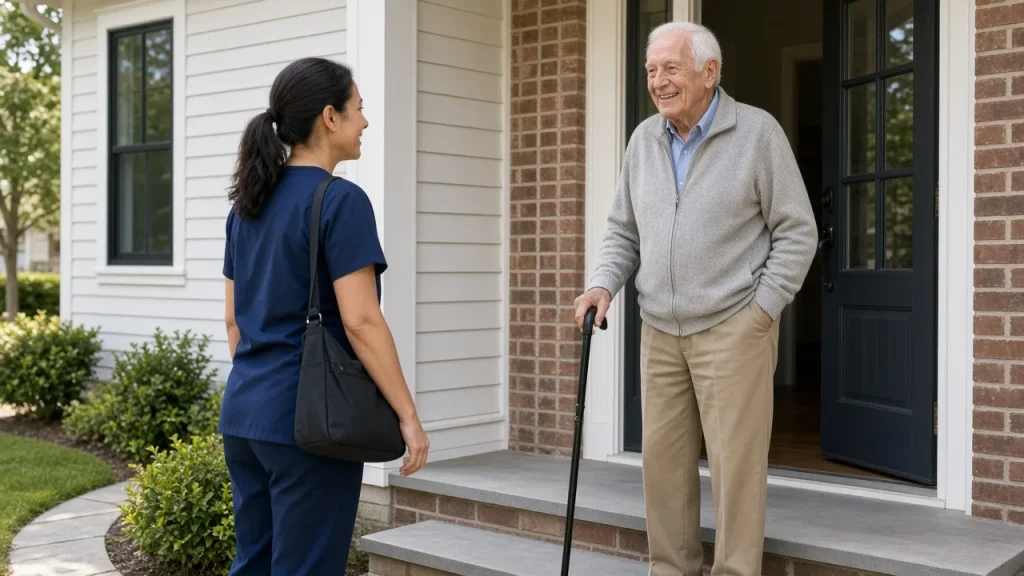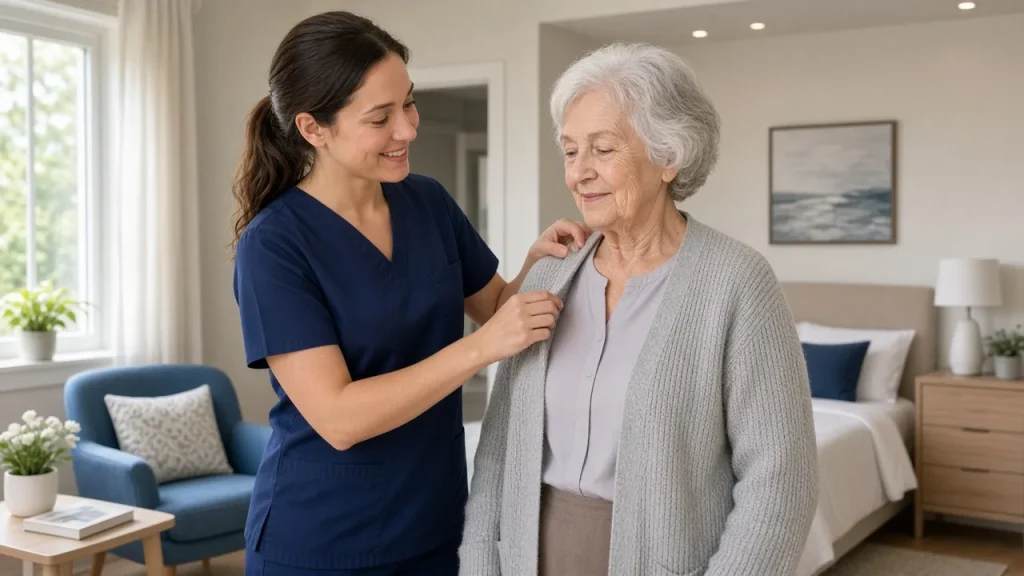

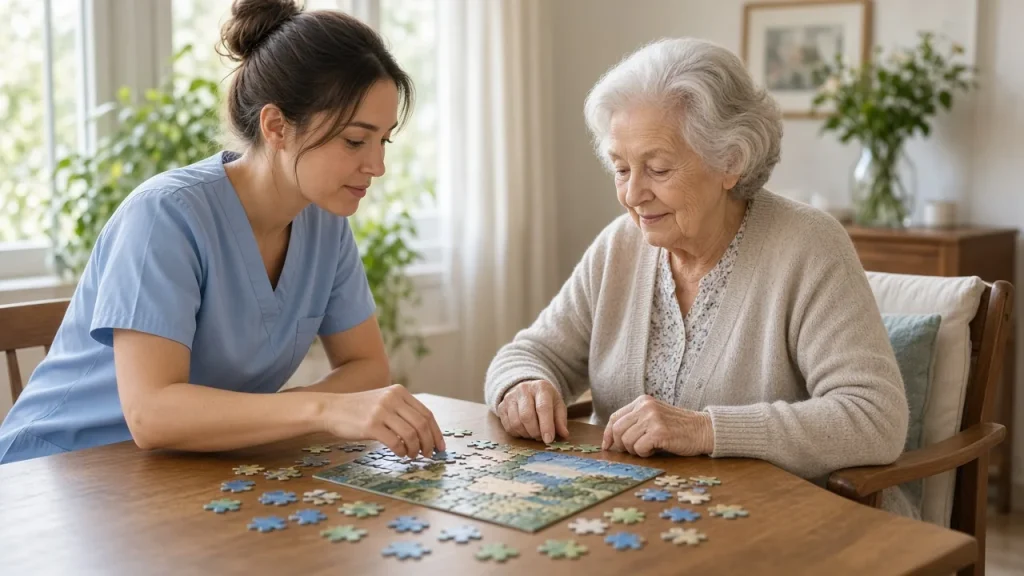
Most families caring for someone with dementia start at home. Familiar rooms, routines and faces can reduce confusion, and many veterans have said for years that they never want to leave the house. Over time the hours of care climb, nights get harder, and families face a choice between more help at home and a move to memory care. Neither answer is wrong; the right one depends on the stage of the disease, the home and the people providing care.
Stage matters more than preference. In-home care often works well in early and some middle stages. As supervision needs approach 24 hours a day, memory care frequently becomes safer and sometimes less expensive.
What In-Home Dementia Care Looks Like
Home care agencies send aides for a few hours or around the clock. They help with bathing, dressing, meals, medication reminders, companionship and supervision. Some families mix agency hours with family caregiving and adult day programs. The VA also offers home and community programs for enrolled veterans; our guide to VA home care programs explains them, and our in-home care section covers the basics.
Strengths: familiar surroundings, one-on-one attention, flexible scheduling, and a spouse can stay together at home.
Limits: gaps between shifts, the cost of overnight coverage, home hazards such as stairs, and heavy strain on family members.
What Memory Care Looks Like
Memory care communities provide secured buildings, staff trained in dementia and structured days with meals and activities. Care is available every hour, and residents are among others at a similar stage. See memory care vs. assisted living if you are also weighing assisted living, and our memory care section for an overview.
Strengths: constant supervision, social engagement, a safe layout, and relief for family caregivers.
Limits: a move can be disorienting at first, less individual attention than private home care, and the cost of a community.
Comparing Cost Over Time
In-home care is billed by the hour. A few hours a day is usually cheaper than memory care, but round-the-clock aides can cost far more than a community. Run the numbers at the hours your parent needs now and the hours likely needed a year from now. Our article on the cost of care for veteran families provides useful context.
Questions That Point Toward Memory Care
- Is the person awake and wandering at night?
- Has the person left home and become lost?
- Is the primary caregiver’s own health suffering?
- Are there behaviors that one caregiver cannot handle safely?
- Is the home impossible to adapt, with stairs or an unsafe bathroom?
If several answers are yes, a memory care visit is worth scheduling. Use our senior living tour questions when you go.
Paying for Dementia Care at Home or in a Community?
Patriot Angels can review whether the veteran or surviving spouse may qualify for Aid & Attendance, which can help with either setting.
Call (844) 757-3047 or use our free consultation page.
Request a Free ConsultationHow Aid & Attendance Works in Each Setting
VA pension with Aid & Attendance can pay up to $3,845 per month in 2026, depending on household status. The benefit goes to the veteran or surviving spouse and can be used for care at home or in a community.
At home, payments to a home care agency or a hired aide for help with daily living can count as unreimbursed medical expenses. Keep invoices and proof of payment. Our guide to VA benefits for in-home care and the article on paying a family member as a caregiver cover the details.
In memory care, the monthly cost for a resident who needs supervision can usually be counted as a medical expense in the same way. For a broader look, see VA benefits for dementia and Alzheimer’s care.
Keep the home in mind. A primary residence on a lot of two acres or less is generally excluded from net worth, even if the veteran moves into care. Selling it changes the picture, so get advice first.
Making the Decision Together
Include the person with dementia as much as possible, especially in the early stages. Ask the doctor about safety. Talk honestly about how much the caregiver can sustain. Our guide on talking with a veteran parent about senior living has advice for conversations involving dementia, and choosing a home care agency helps if you stay at home for now.
Patriot Angels has helped veterans and surviving spouses apply for Aid & Attendance since 2012. Call (844) 757-3047 for a free consultation.
General information only. Medical decisions should be made with the veteran’s physician.
If you or a loved one served our country, let us help you secure the benefits you’ve earned.
Start YourJourney Today
Frequently Asked Questions
Is in-home care or memory care cheaper?
Part-time home care is usually cheaper. Round-the-clock home care often costs more than memory care.
Can Aid & Attendance pay for in-home dementia care?
Yes. The benefit is paid to the veteran or surviving spouse and can be used for care at home, and paid care can reduce countable income.
When is it time to move to memory care?
Common signs include night wandering, getting lost, unsafe behaviors and caregiver burnout.
Does the VA offer dementia care at home?
Enrolled veterans may qualify for VA home and community care programs based on clinical need and availability.
Does moving to memory care affect the home exclusion?
The primary residence generally stays excluded from net worth while the veteran lives in a care facility.
Can family caregivers be paid?
In some cases. Payments to a family member under a proper care arrangement may count as medical expenses for VA pension.