
VA BENEFITS FOR IN-HOME CARE
Veterans and surviving spouses may qualify for VA benefits that help cover in-home care costs while remaining in the comfort of their own home.
Free consultation. No obligation.
Does the VA Help Pay for In-Home Care?
Yes. Eligible veterans and surviving spouses may receive monthly VA benefits that can help offset the cost of in-home care, including support provided by a professional caregiver, home care agency, or qualified private caregiver.
One of the most important benefits is Aid & Attendance , which may provide tax-free financial support when a veteran or surviving spouse needs help with daily activities such as bathing, dressing, mobility, meal preparation, medication reminders, or supervision.
For families trying to keep a loved one safe at home, this benefit may help make daily care more affordable while allowing veterans and surviving spouses to remain in familiar, comfortable surroundings.

Key Takeaways
- VA benefits may help with in-home care costs for qualifying veterans and surviving spouses who need support while remaining at home.
- In-home care can support aging in place by helping with daily tasks such as bathing, dressing, meal preparation, mobility, medication reminders, and light housekeeping.
- Caregiver support can be flexible, with care provided through home care agencies, private caregivers, or family support depending on the situation.
- Care needs still play an important role in eligibility, especially when regular help with activities of daily living or supervision is needed at home.
- Monthly VA benefit amounts may help offset care expenses, giving families more flexibility when planning for ongoing help at home.
- In-home care costs and options vary by state, so exploring local resources can help families compare care needs, costs, and next steps.
Navigating VA Benefits for In-Home Care
In-home care can become a major monthly expense when a veteran or surviving spouse begins needing regular support at home. The national median cost for non-medical caregiver services is $6,673 per month, making it important for families to understand how daily care needs, caregiver hours, and long-term support can affect the overall cost of aging in place.
Unlike assisted living or nursing home care, in-home care allows a veteran or surviving spouse to remain in familiar surroundings while receiving help with everyday routines. This may include bathing, dressing, meal preparation, medication reminders, mobility support, light housekeeping, transportation, companionship, or supervision.
Care at home can also be flexible. Some families need only a few hours of support each week, while others may need daily help from a home care agency, private caregiver, or trusted family caregiver. The right arrangement often depends on how much help is needed, whether the person can be left alone safely, and how much family support is already available.
For qualifying veterans and surviving spouses, VA benefits may help make in-home care more affordable. Aid & Attendance may provide monthly tax-free support that families can use toward care expenses when regular help with daily living is needed.
If you’re trying to keep a veteran or surviving spouse safe at home, Patriot Angels can help you understand how VA benefits may fit into your care plan and what steps to take next.

What In-Home Care Services May Include
In-home care helps veterans and surviving spouses remain in familiar surroundings while receiving support with the daily routines that may become harder to manage alone. Instead of moving into a care community, families can arrange help at home based on the person’s needs, schedule, and level of independence.
Common in-home care services may include help with bathing, dressing, grooming, meal preparation, medication reminders, mobility, light housekeeping, transportation, companionship, and supervision. The amount of support can vary widely, from a few hours per week to daily or around-the-clock care.
Personal Care Support
In-home caregivers may help with bathing, dressing, grooming, toileting, mobility, and other personal care needs. This type of support can make daily routines safer while helping veterans and surviving spouses remain at home with dignity.

Household Help and Daily Routines
Many families use in-home care for meal preparation, light housekeeping, laundry, errands, medication reminders, and transportation. These services can reduce daily stress and help create a more manageable routine at home.

Companionship and Supervision
In-home care can also provide companionship, check-ins, safety monitoring, and supervision for individuals who should not be left alone for long periods. This can be especially helpful when families are balancing work, caregiving, and long-term planning.

Flexible Caregiver Options
Care may be arranged through a home care agency, private caregiver, or family caregiver depending on the situation. Some families need a few hours each week, while others need daily or around-the-clock help to keep a loved one safe at home.
Caregiver Support Can Be Flexible
In-home care does not look the same for every family. Some veterans and surviving spouses need help a few times a week, while others may need daily support to remain safe at home. Care can often be arranged through a home care agency, private caregiver, or family caregiver depending on the situation.
Home Care Agencies
A home care agency may provide trained caregivers who help with personal care, daily routines, companionship, transportation, meal preparation, and other non-medical support. Agencies may also help families coordinate schedules and adjust care as needs change.
Private Caregivers
Some families work directly with a private caregiver for more personalized support at home. This arrangement may offer flexibility, but families should consider documentation, scheduling, backup care, and how care expenses will be tracked.
Family Caregiver Support
In some situations, a trusted family member may help provide regular care at home. Families should keep clear records of care needs, caregiver responsibilities, and any care-related expenses when planning long-term support.
May In-Home Care Support VA Benefit Eligibility?
In-home care may help support a VA benefits claim when a veteran or surviving spouse needs regular assistance with daily living while remaining at home. Many families use in-home care to help with bathing, dressing, mobility, meal preparation, medication reminders, supervision, and other day-to-day needs that may become harder to manage alone.
While eligibility still depends on military service, care needs, and financial guidelines, documented in-home care can play an important role in showing that ongoing personal support may be needed. For families planning to age in place, understanding how care at home connects to potential VA benefits can be an important part of long-term planning.
1. Military Service Requirements
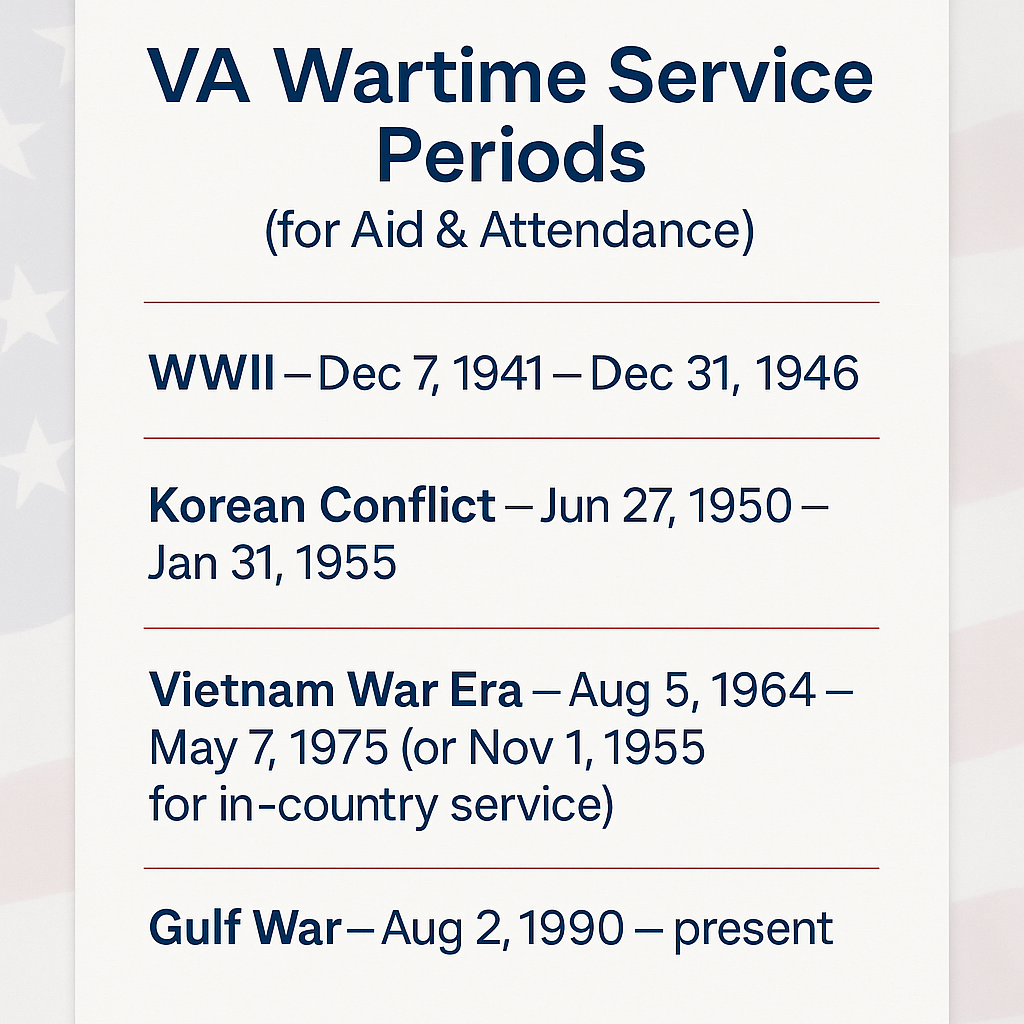
In-home care may support a VA benefits claim when a veteran or surviving spouse needs regular help with daily activities at home, but the veteran must first meet the VA’s basic service requirements. In general, Aid & Attendance is available to qualifying wartime veterans and surviving spouses of wartime veterans who meet discharge and active-duty service standards.
- The applicant must be a veteran or the surviving spouse of a veteran.
- The veteran’s discharge must not be dishonorable.
- The veteran generally must have served during a VA-recognized wartime period.
- Minimum active-duty service requirements may apply based on when the veteran served.
- Families planning for in-home care should confirm service history early, since military records are a key part of the VA benefits application.
2. In-Home Care Needs
In-home care may become part of the VA benefits conversation when a veteran or surviving spouse needs regular help to remain safe at home. Instead of focusing on a facility setting, this care usually centers on the daily support needed inside the home, such as personal care, mobility help, supervision, meal support, and routine household assistance.
- Help with activities of daily living, such as bathing, dressing, eating, toileting, grooming, or moving safely around the home.
- Ongoing personal care support at home, including mobility assistance, medication reminders, meal preparation, hygiene support, or help maintaining a safe daily routine.
- Supervision or safety support when physical limitations, fall risks, dementia, Alzheimer’s disease, or other cognitive concerns make it unsafe for someone to be alone for long periods.
- Documentation from a home care agency, private caregiver, family caregiver, physician, or care provider may help show why regular in-home support is needed.
3. Financial Guidelines
The VA also reviews income, assets, and ongoing care expenses when determining Aid & Attendance eligibility. Because in-home care can create recurring monthly costs, expenses paid to a home care agency, private caregiver, or documented caregiver arrangement may play an important role in how a family’s financial situation is reviewed.
- The VA considers both income and assets when reviewing financial eligibility.
- Certain unreimbursed care expenses, including in-home care costs, may help reduce countable income.
- Families should gather records that show monthly income, assets, caregiver payments, home care invoices, and other care-related expenses.
- Financial rules can be complex, so many families choose to review eligibility before assuming they do or do not qualify.
How Much Can Aid & Attendance
Help With In-Home Care?
The VA Aid & Attendance benefit provides monthly, tax-free financial support to qualifying wartime veterans and surviving spouses. For families using in-home care, these payments may help offset the cost of personal care, caregiver support, meal preparation, mobility assistance, supervision, and other daily support services provided at home.
For 2026, eligible applicants may receive up to $3,845 per month in additional income. Actual benefit amounts depend on marital status, documented care needs, income, assets, and qualifying care expenses.
While Aid & Attendance may not cover the full cost of in-home care, it can make ongoing caregiver support more manageable for eligible veterans and surviving spouses who want to remain at home. Patriot Angels helps families understand what they may qualify for and how this benefit can fit into their long-term care plan.
Aid and Attendance Benefit Amounts (2026)
Explore In-Home Care Support by State
In-home care costs, caregiver availability, and long-term care options can vary widely by state. Explore the pages below to learn more about in-home care support where you live and how VA benefits may help qualifying veterans and surviving spouses offset the cost of care at home.
Get Help Understanding Your In-Home Care Benefit Options
If you’re exploring in-home care for a veteran or surviving spouse, Patriot Angels can help you understand whether Aid & Attendance may help offset caregiver costs, what documentation may be needed, and how to move forward with more confidence.
See If You Qualify for Aid & AttendanceFrequently Asked Questions
Yes. VA financial benefits such as VA Pension and Aid and Attendance may help qualifying veterans and surviving spouses pay for in-home care. These funds may be used toward caregiver support, personal care, help with daily routines, and other care-related expenses provided at home.
In-home care may include help with bathing, dressing, grooming, mobility, meal preparation, medication reminders, light housekeeping, transportation, companionship, and supervision. The exact care arrangement can vary depending on the veteran’s needs and the level of support required at home.
In-home care may support an Aid and Attendance claim when a veteran or surviving spouse needs regular help with activities of daily living or supervision. Eligibility depends on service history, care needs, financial guidelines, and proper documentation of the support being provided.
In some situations, a family member may provide regular care at home. Families should keep clear records of the care being provided, the schedule of support, and any care-related payments or expenses, especially when those costs may be used as part of a VA benefits review.
The amount depends on the applicant’s marital status, care needs, income, assets, and qualifying expenses. For 2026, eligible applicants may receive up to $3,845 per month, though actual benefit amounts vary by situation.
Families may need military service records, financial documentation, medical evidence showing the need for care, and records of in-home care expenses. This may include caregiver invoices, care agreements, physician forms, or documentation showing regular help with daily living activities.
Sources & Policy References
National Research and Policy References for VA In-Home Care Benefits
The information on this page is based on official U.S. Department of Veterans Affairs resources, national long-term care cost data, and home care guidance references. These sources explain how Aid and Attendance works, how veterans and surviving spouses may qualify, and how in-home care costs compare across the country.
Because VA pension rules, benefit rates, forms, caregiver documentation, and long-term care cost data may change over time, families should verify the most current information directly with the Department of Veterans Affairs and the original source organizations listed below.
Official VA Aid and Attendance References
VA Forms and Application Materials
Current VA Pension Rates
National Cost of Care Data
In-Home Care and Aging in Place Resources
Important Note
This page is intended for educational purposes only and should not be considered legal, medical, or financial advice. VA benefit rules, caregiver documentation requirements, in-home care costs, and policy guidance may change over time.